
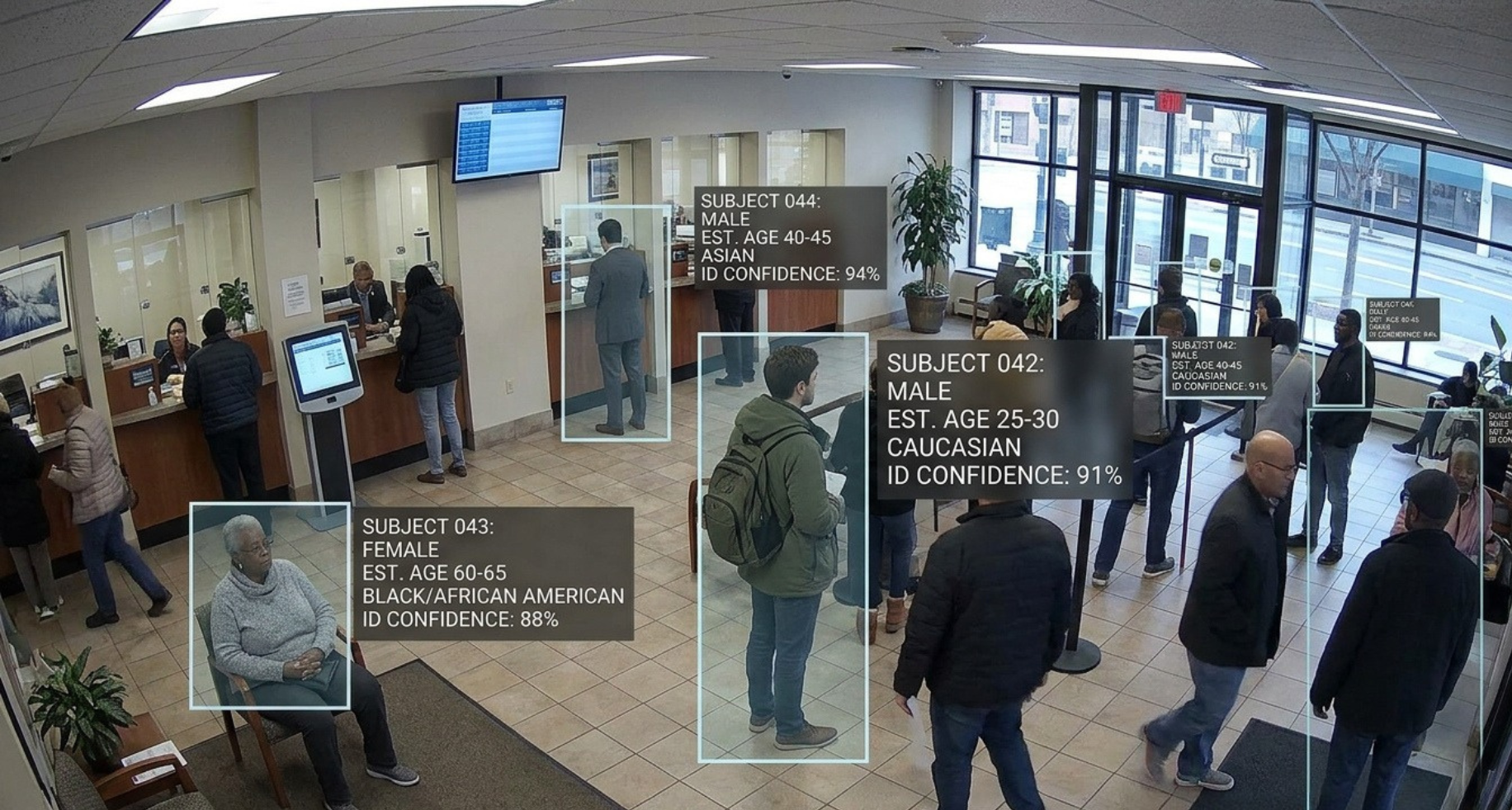
Attribute Recognition
Search recorded footage by description — clothing color, age, gender, and accessories — instead of scrubbing timelines.
"Red jacket, dark pants, carrying a bag, left about an hour ago." Attribute Recognition turns that description into a search query — instead of an afternoon of scrubbing footage.
Attribute Recognition analyzes each detected person and tags them with descriptive attributes. At the basic level, it distinguishes the color of a person's top and bottom clothing. The advanced level adds detailed attributes such as age, gender, and accessories like a bag or hat, with the extracted attributes selectable per camera so processing stays focused on what your site actually uses.
Those attributes work in two directions. At the point of detection, they filter events — so a rule fires only for people matching a description, and only relevant alerts reach an operator. And as metadata sent to your video management system, they make recorded footage searchable by description afterwards: an operator locates a person of interest across hours of recording by querying "blue top, khaki bottoms, backpack" rather than scrubbing timelines. The same aggregate data doubles as visitor profiling input for retail teams.
What It Does

Who Uses It
A Shoplifter Is Reported as a Description. Attribute Search Finds Them Across a Day of Footage in Seconds.
Search "gray hoodie, black pants, shoulder bag" and get every appearance across the day's cameras — including which entrance they used, where they went, and when they left. No footage scrubbing. No guessing which camera to check first.
- Attribute search across all cameras simultaneously from a single description
- Returns every appearance with timestamp and camera location
- Cuts post-incident review from hours to seconds

For a Lost Child or a Be-on-the-Lookout Call, Every Minute the Window Is Open Matters.
Security can sweep dozens of cameras by clothing color instead of assigning three guards to review video while the window to act closes. A description becomes a search — and the result is a location, not a guess.
- Search across dozens of cameras by clothing color and type simultaneously
- Locates a described individual without pulling staff off the floor to review footage
- Covers lost-child responses, BOLO calls, and incident follow-up

Evidence Assembly in Minutes — Delivered to Law Enforcement the Same Day.
After an incident, investigators reconstruct a subject's full path through the branch and parking area by attribute query. What used to take an afternoon of footage review becomes a complete movement record assembled in minutes and ready for law enforcement the same day.
- Full subject path reconstructed across branch and parking cameras by query
- Evidence package assembled in minutes, not hours
- Same-day delivery to law enforcement investigators

Locate a Described Individual Across Platform and Concourse Cameras — and Know if They're Still on the Property.
Respond to passenger incident reports by searching platform and concourse cameras by the description you were given. Attribute Recognition confirms whether the individual is still on the property, which exit they used, and when — so response decisions are based on current location, not last known position.
- Cross-camera search across platforms, concourses, and exits
- Confirms current on-property status from a description alone
- Supports passenger incident response and security coordination

The Same Detections That Serve Security Also Build the Visitor Profile That Serves the Business.
Advanced attributes like age and gender aggregate into visitor profiles that inform merchandising placement and campaign decisions — without any additional hardware. One camera platform delivers security intelligence and customer insight from the same underlying detections.
- Age and gender attributes aggregate into visitor profile data
- Informs merchandising, placement, and campaign decisions
- No additional hardware — security cameras serve both functions

How It Works
Attribute Recognition serves both halves of the Clear Watch platform. For security, attribute-filtered events reach Clear Watch's live monitoring operators with the description already attached, and post-event attribute search turns investigations from hours into minutes. For the business, aggregated attribute data feeds visitor profiling on the same cameras. One platform: faster investigations and richer intelligence from footage you were already recording.

FAQs
-
Basic distinguishes the color of each person's top and bottom clothing. Advanced adds detailed attributes such as age, gender, and accessories like bags and hats — and lets you select which attributes to extract per camera.
-
No. Attribute Recognition describes people — clothing colors, age range, gender, accessories — it does not match faces or establish identity. It answers "where did the person in the red jacket go," not "who is this person."
-
Attributes are sent as metadata with each detection to your video management system. Instead of scrubbing hours of recording, an operator queries by description and jumps straight to every matching appearance.

The Description You Already Have Is the Search Query You Need
GET STARTED
Attribute Recognition turns the way witnesses describe people into the way you find them on camera — across every hour of footage, every camera on the property. Tell us about your site and we'll show you how attribute search works in practice.